


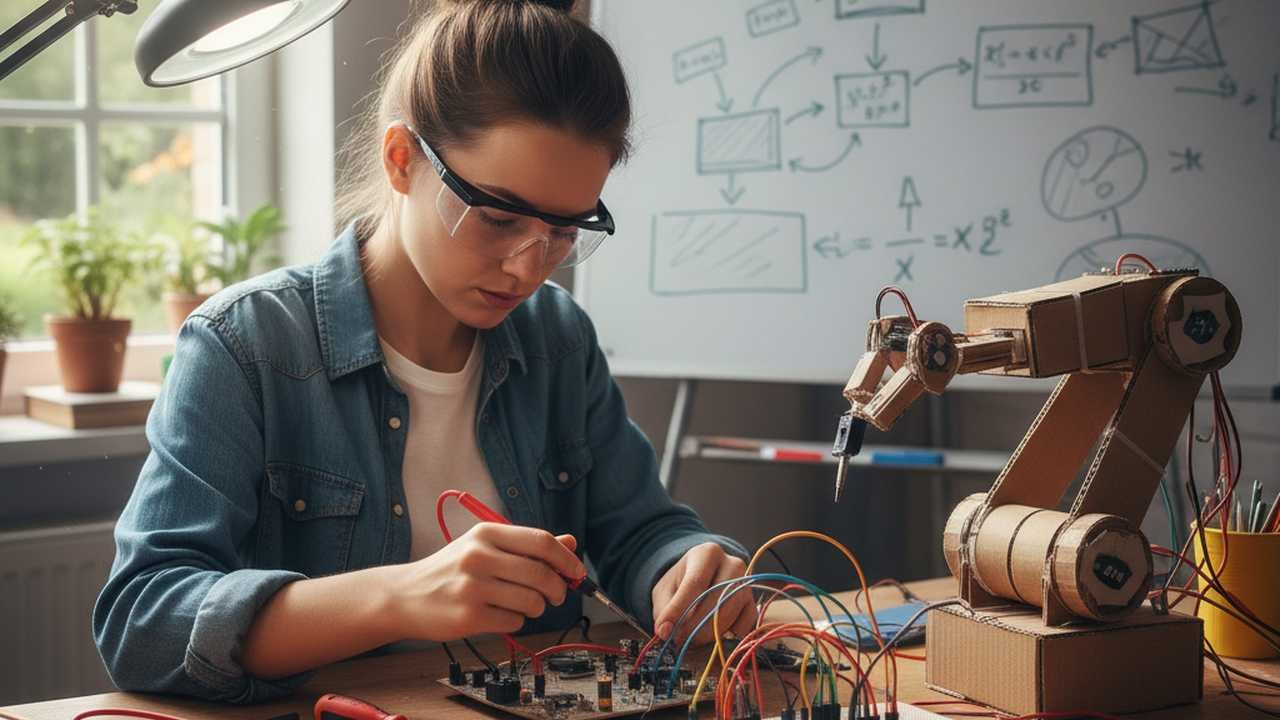
Imagine a world where your child doesn’t just memorize facts but actively builds, experiments, and discovers. A world where learning isn’t confined to textbooks but is an immersive, hands-on adventure. This world exists today, and it’s powered by DIY STEM projects. These projects are not just activities; they are gateways to developing critical analytical thinking and experimentation skills that are essential in today’s fast-paced, innovation-driven world.
In this article, we’ll explore how DIY STEM projects can transform your child’s approach to learning, making them not just consumers of information but creators and innovators. We’ll delve into the importance of analytical thinking and experimentation, how DIY STEM projects foster these skills, and why integrating tools like Minecraft Education Edition can enhance this learning experience.
The Power of Analytical Thinking in STEM Education
Analytical thinking is the ability to deconstruct complex problems into manageable parts, identify patterns, and devise logical solutions. In STEM education, this skill is paramount. DIY STEM projects require students to approach problems methodically, test hypotheses, and refine their solutions based on outcomes. For instance, constructing a simple circuit involves understanding electrical flow, predicting outcomes, and troubleshooting issues – each step honing analytical abilities.
These projects encourage a mindset where challenges are seen as opportunities for growth. When a student encounters a problem, rather than feeling defeated, they learn to analyze the situation, consider possible solutions, and test them. This iterative process mirrors real-world problem-solving and prepares students for future challenges in any field.
Experimentation: The Heart of Scientific Discovery
Experimentation is the process of testing ideas through controlled methods to discover new knowledge or validate existing theories. DIY STEM projects are inherently experimental. Whether it’s creating a homemade volcano to understand chemical reactions or building a bridge from popsicle sticks to test structural integrity, these projects provide a platform for students to hypothesize, test, and conclude.
Through experimentation, students learn the scientific method in a tangible way. They develop hypotheses, conduct experiments, collect data, and analyze results. This hands-on approach not only solidifies their understanding of scientific principles but also instills a sense of curiosity and a desire to explore further.
Building Critical Thinking Through Hands-On Projects
Critical thinking involves evaluating information and arguments, identifying patterns, and making reasoned judgments. DIY STEM projects are a fertile ground for cultivating this skill. When students engage in activities like designing a water filtration system or programming a simple robot, they must consider various factors, weigh options, and make decisions based on evidence.
These projects often present open-ended problems with multiple solutions, requiring students to think critically about the best approach. This not only enhances their problem-solving abilities but also fosters creativity and innovation. The process of trial and error teaches resilience and the importance of learning from mistakes.
The Role of Minecraft Education Edition in Enhancing STEM Learning
Minecraft Education Edition is more than just a game; it’s a powerful educational tool that brings STEM concepts to life. By integrating elements like Minecraft Education mobs, students can explore biological systems, ecosystems, and environmental science in an interactive virtual world. For example, coding a mob to exhibit certain behaviors allows students to understand programming logic and the impact of environmental variables on living organisms.
The game’s open-world nature encourages exploration and experimentation. Students can build structures, conduct experiments, and solve problems in a safe and controlled environment. This not only reinforces analytical thinking and experimentation skills but also makes learning engaging and fun.
Fostering Collaboration and Communication Skills
Many DIY STEM projects are collaborative, requiring students to work in teams to achieve a common goal. This collaboration fosters communication, teamwork, and leadership skills. In the context of Minecraft Education Edition, students can collaborate on building projects, share ideas, and solve problems together, mirroring real-world working environments.
Effective communication is crucial in STEM fields, and these projects provide ample opportunities for students to practice and develop this skill. Whether it’s presenting their findings, explaining their reasoning, or discussing their design choices, students learn to articulate their thoughts clearly and listen to others’ perspectives.
Encouraging a Growth Mindset Through DIY STEM Projects
A growth mindset is the belief that abilities and intelligence can be developed through dedication and hard work. DIY STEM projects inherently promote this mindset. When students engage in these projects, they encounter challenges and setbacks. However, instead of giving up, they learn to persevere, adapt, and improve their solutions.
This approach teaches students that failure is not a permanent condition but a stepping stone to success. It encourages them to view challenges as opportunities to learn and grow, fostering resilience and a positive attitude toward learning.
Real-World Applications and Career Readiness
The skills developed through DIY STEM projects are directly applicable to real-world scenarios. Analytical thinking, problem-solving, and experimentation are essential in various careers, from engineering and technology to healthcare and environmental science. By engaging in these projects, students gain practical experience that prepares them for future careers.
Moreover, these projects often involve aspects of design, coding, and data analysis, which are in high demand in today’s job market. By developing these skills early, students position themselves for success in the rapidly evolving workforce.
Integrating DIY STEM Projects into the Classroom Curriculum
Integrating DIY STEM projects into the classroom curriculum can enhance student engagement and learning outcomes. Teachers can design projects that align with curriculum objectives while incorporating elements of creativity and hands-on learning. For instance, a project on renewable energy could involve building a solar-powered model, allowing students to apply theoretical knowledge in a practical setting.
Furthermore, incorporating tools like Minecraft Education Edition can enrich these projects. Teachers can use the game to simulate real-world scenarios, conduct virtual experiments, and facilitate collaborative learning experiences, making STEM concepts more accessible and engaging for students.
Getting Started with DIY STEM Projects
Embarking on DIY STEM projects doesn’t require a large budget or specialized equipment. Many projects can be started with everyday materials found at home or in the classroom. Online resources, such as the Minecraft Education lesson library, offer a plethora of ideas and guides to help educators and students get started.
Additionally, platforms like Tynker provide tools for creating and coding Minecraft Education mobs, allowing students to delve into programming and game design. These resources make it easy to integrate STEM learning into everyday activities, fostering a culture of curiosity and innovation.
If you want to discover the transformative impact of engaging activities on young minds, Meta Title provides insights into how hands-on STEM kits foster critical problem-solving skills.
