


In today’s rapidly evolving world, the demand for innovative thinkers and problem-solvers has never been higher. Traditional educational methods often fall short in nurturing these skills. Enter makerspaces – dynamic environments that blend creativity, hands-on learning, and real-world problem-solving. These spaces are revolutionizing education by providing students with the tools and freedom to bring their ideas to life. But what makes makerspaces so effective, and why should you care? Let’s delve into the transformative power of makerspaces and how they are shaping the future of education.
The Rise of Makerspaces in Education
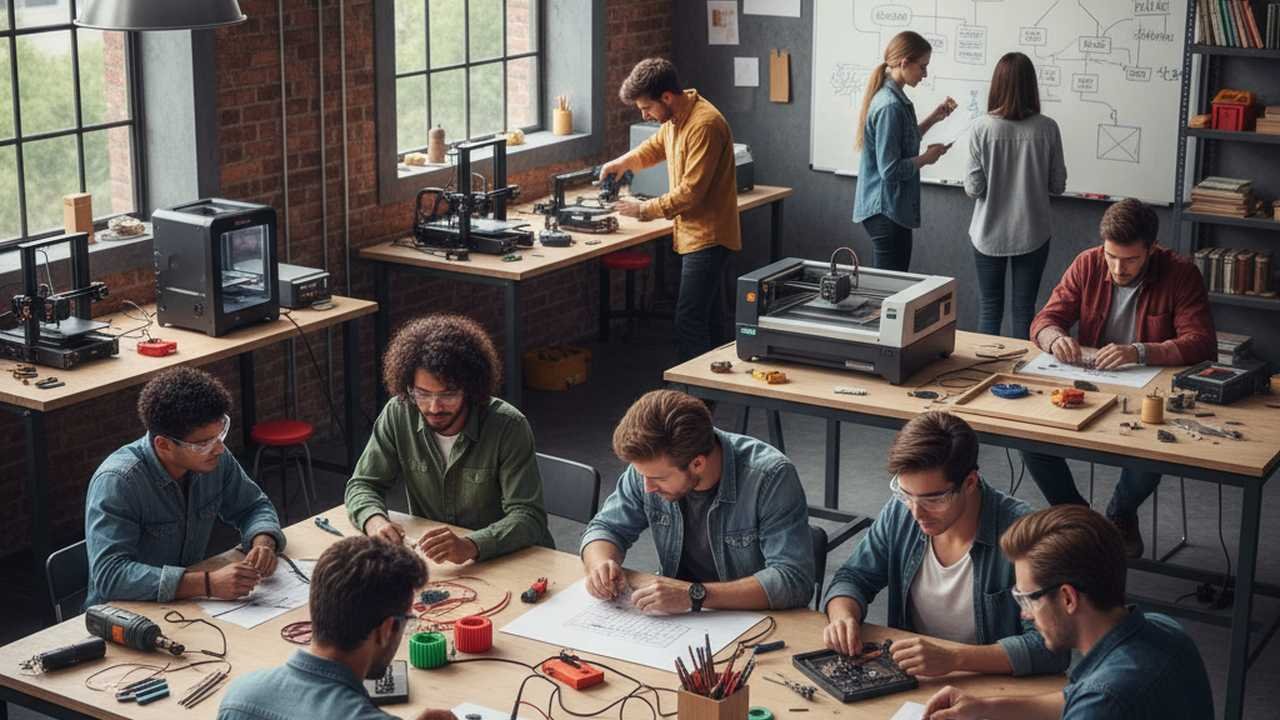
Makerspaces, often referred to as “hackerspaces” or “innovation labs,” are collaborative workspaces equipped with various tools and technologies, such as 3D printers, laser cutters, and electronics kits. These spaces encourage students to engage in hands-on projects, fostering a culture of creativity and experimentation. The concept of makerspaces has gained significant traction in educational institutions worldwide, from elementary schools to universities.
The integration of makerspaces into educational settings is not merely a trend but a response to the growing need for skills that go beyond rote memorization. In a world where information is readily accessible, the ability to think critically, solve complex problems, and innovate is paramount. Makerspaces provide an environment where students can develop these skills through practical application and collaborative efforts.
Empowering Students Through Hands-On Learning
One of the most compelling aspects of makerspaces is their emphasis on experiential learning. Instead of passively receiving information, students actively engage in the learning process by creating tangible projects. This hands-on approach not only enhances understanding but also makes learning more engaging and enjoyable.
Consider a student tasked with designing a model of a sustainable city. In a traditional classroom, this might involve reading about urban planning and writing a report. In a makerspace, the student would research, design, and construct a physical model, applying concepts from various disciplines such as engineering, environmental science, and mathematics. This immersive experience deepens comprehension and ignites a passion for learning.
Fostering Innovation Through Collaboration
Makerspaces are inherently collaborative environments. Students often work in teams, sharing ideas, resources, and expertise. This collaborative spirit mirrors real-world scenarios, where innovation thrives in diverse and multidisciplinary teams.
Working together on projects teaches students valuable interpersonal skills, such as communication, negotiation, and conflict resolution. These experiences prepare them for future careers, where teamwork and collaboration are essential. Moreover, exposure to diverse perspectives enhances creativity, leading to more innovative solutions to problems.
Enhancing Problem-Solving Abilities
At the heart of makerspaces is the emphasis on problem-solving. Students are presented with challenges that require critical thinking and creativity to overcome. Whether it’s designing a prosthetic limb or developing a renewable energy solution, the problems posed in makerspaces are complex and multifaceted.
Through trial and error, students learn to approach problems from different angles, persevere through setbacks, and iterate on their designs. This process not only hones their problem-solving skills but also builds resilience and adaptability – traits that are invaluable in both academic and professional settings.
Bridging the Gap Between Theory and Practice
Traditional education often separates theoretical knowledge from practical application. Makerspaces bridge this gap by allowing students to apply what they’ve learned in the classroom to real-world projects. This integration reinforces theoretical concepts and demonstrates their relevance and utility.
For instance, a student studying physics might use principles of motion and energy to design a roller coaster model in a makerspace. This project not only reinforces their understanding of physics but also provides a tangible example of how theoretical concepts manifest in the real world.
Promoting a Growth Mindset
Failure is an inevitable part of the learning process, and makerspaces embrace this reality. In these environments, mistakes are viewed as opportunities for growth rather than setbacks. Students are encouraged to experiment, fail, and learn from their experiences.
This approach fosters a growth mindset – the belief that abilities and intelligence can be developed through dedication and hard work. By cultivating this mindset, makerspaces help students develop resilience, perseverance, and a positive attitude toward challenges.
Preparing Students for Future Careers
The skills developed in makerspaces are directly applicable to many careers in today’s economy. Fields such as engineering, technology, design, and entrepreneurship value creativity, problem-solving, and collaboration – skills that makerspaces nurture.
Moreover, the experience gained in makerspaces can give students a competitive edge in the job market. Employers increasingly seek individuals who can think critically, work well in teams, and approach problems with innovative solutions. Makerspaces provide a platform for students to develop and showcase these competencies.
Creating Inclusive Learning Environments
Makerspaces have the potential to create inclusive learning environments that cater to diverse learning styles and abilities. By offering a variety of tools and resources, makerspaces accommodate different interests and talents, allowing all students to find a niche where they can thrive.
Additionally, the collaborative nature of makerspaces promotes inclusivity by encouraging students to work together and learn from one another. This fosters a sense of community and belonging, which is essential for student engagement and success.
Conclusion: Embracing the Maker Movement
The integration of makerspaces into education represents a paradigm shift from traditional teaching methods to a more dynamic and interactive approach to learning. By fostering creativity, innovation, and problem-solving abilities, makerspaces equip students with the skills necessary to navigate and succeed in an increasingly complex world.
As educators and institutions recognize the value of makerspaces, their presence in schools and universities continues to grow. Embracing the maker movement is not merely about adopting new tools but about cultivating a culture of curiosity, collaboration, and continuous learning.
Don’t miss out on the opportunity to be part of this educational revolution. Explore the possibilities that makerspaces offer and discover how they can transform the learning experience for students and educators alike.
As educators increasingly seek innovative ways to enhance student engagement, virtual labs have emerged as a powerful tool in the realm of experiential learning. By integrating these digital platforms into curricula, particularly in Indiana public education, teachers can significantly improve STEM knowledge retention among students.
