


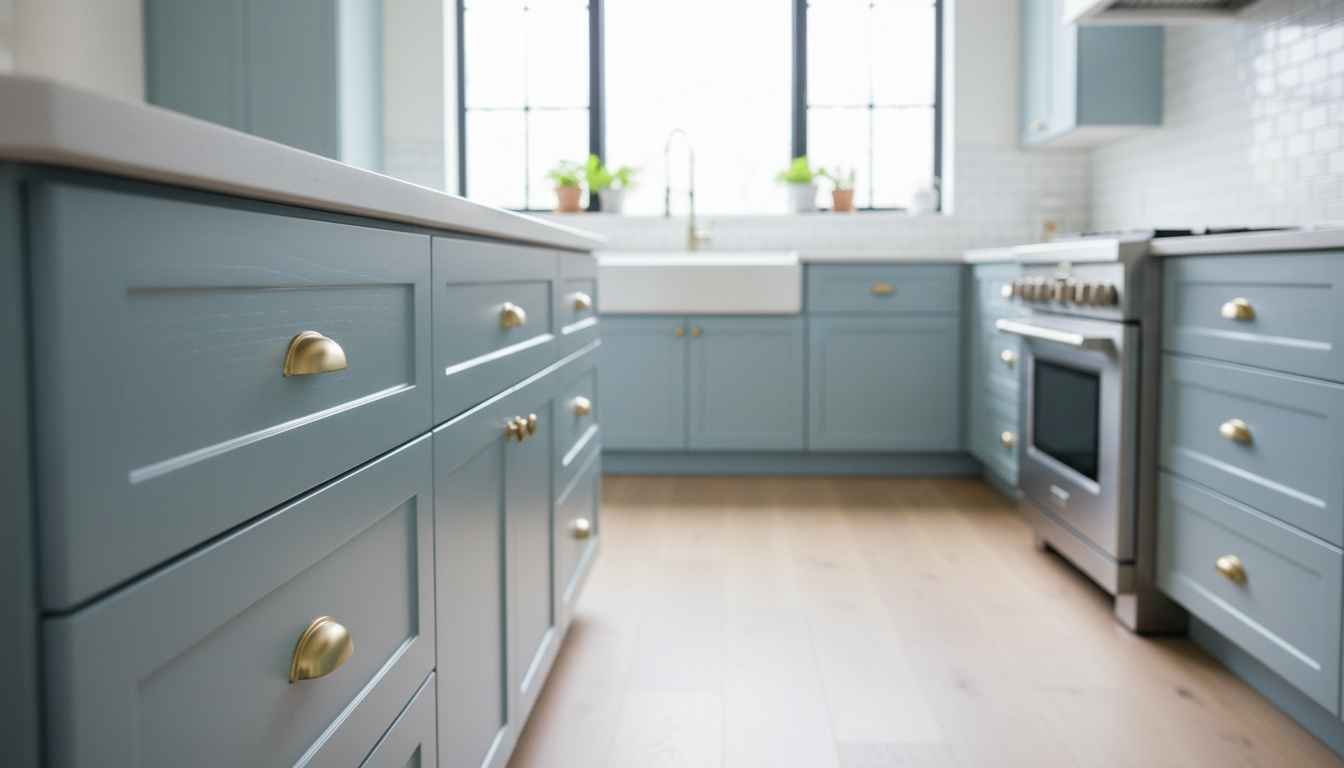
Let’s play a game. Imagine opening your kitchen in a few months and seeing brand-new, professionally painted cabinets gleaming under your lights. Sounds amazing, right? But now, picture the sticker shock when you realize the true cost behind that transformation. Many homeowners underestimate this expense and end up regretting their choices. To get to the bottom of this, we spoke with a senior industry veteran with over 25 years in home improvement and painting expertise.
Key Takeaways
– Painting kitchen cabinets can range from $1,200 to $7,000 depending on size, materials, and finish.
– Labor accounts for the majority of costs, often 60–70% of total expenses.
– Material choice, prep work, and specialized finishes dramatically affect pricing.
– DIY painting is possible but requires extensive time, tools, and precision to avoid long-term issues.
– Certain cabinet types and conditions may be better off replaced rather than painted.
Q&A With an Expert on Cabinet Painting Costs
Q: What factors determine the cost of painting kitchen cabinets?
A: Several key elements dictate the final price. First is the size of your kitchen and the number of cabinets. A small galley kitchen might be a few hundred dollars, whereas a full-scale remodel in a large home can easily exceed $5,000. The type of paint and finish matters too. High-end paints and specialty finishes like lacquer or enamel require more labor and cost more upfront.
Q: Can you break down typical pricing ranges?
A: Absolutely. For a standard 10×10 kitchen, expect $1,200–$2,500 if you’re hiring a professional. This usually includes sanding, priming, two coats of paint, and clear topcoat. Larger kitchens with 20+ cabinets can jump to $4,000–$7,000. Custom finishes, intricate designs, or color-matching older cabinetry can add $500–$1,500 extra. Labor alone often represents 60–70% of this total.
Q: How much does prep work influence costs?
A: Prep is the silent killer of budgets. Stripping old paint, sanding, filling in dents or gouges, and cleaning can take more time than painting itself. Skipping proper prep almost always leads to peeling or uneven finishes. Expect prep to cost $300–$800 for a medium-sized kitchen, which might feel painful initially, but it’s non-negotiable if you want professional results.
Q: Are there DIY options that make sense financially?
A: You can absolutely save money by doing it yourself, but it’s a serious time investment. Expect 20–40 hours of prep and painting for a typical kitchen. You’ll need specialized tools like paint sprayers, sanders, and high-quality brushes. Even then, unless you have experience, you risk drips, streaks, or uneven coverage. For some, it’s worth the DIY gamble, but many end up hiring a professional anyway. Investing in the right tools is crucial, which is why I often recommend checking reliable suppliers like Kilns, Ceramic Supplies, Pottery Wheels, Gas Kilns, Electric Kilns, Pottery Tools and much more at Bailey Pottery for high-quality painting tools and supplies.
Q: How does the type of cabinet material impact cost?
A: Materials make a huge difference. Solid wood cabinets are easier to paint evenly but can be pricier to repair if damaged. MDF or particleboard absorbs paint differently, sometimes requiring multiple primer coats. Laminates are the trickiest and often require specialized primers and bonding agents, increasing both cost and labor time.
Q: Are there hidden costs most homeowners overlook?
A: Definitely. Hardware removal, door hinges, knobs, and drawer pulls must be factored in. Some homeowners also forget the cost of moving appliances or protecting countertops and floors. Then there’s the time cost – your kitchen might be unusable for days or even a week. Unexpected issues like water damage or mold behind cabinets can also add hundreds of dollars.
Q: Potential Drawbacks and Who Should Avoid This
A: Painting kitchen cabinets isn’t perfect for everyone. If your cabinets are extensively damaged, warped, or outdated, painting might be a temporary solution rather than a permanent fix. Those on a tight schedule or with very high-end materials might find replacement more practical. DIYers without patience or precision skills risk a subpar finish that devalues the entire kitchen. Finally, certain paints and finishes emit fumes, which can be hazardous without proper ventilation, making this task unsuitable for families with young children or respiratory concerns.
Q: How can homeowners get the best value for their money?
A: Timing and preparation are critical. Off-season projects may save on labor costs. Collect multiple quotes from licensed professionals, and don’t assume the cheapest option is best – it often leads to costly rework. Choosing mid-range paints with durable finishes balances cost and longevity. Investing upfront in quality primers and tools ensures your cabinets last longer and look better.
Q: Are there ways to extend the lifespan of painted cabinets?
A: Absolutely. Use a clear topcoat to protect against moisture and scratches. Avoid harsh cleaning chemicals, and clean spills promptly. Regular touch-ups can keep the cabinets looking fresh. Proper ventilation during painting prevents peeling and ensures a smooth finish. Think of it as preventative maintenance – you spend a bit more upfront but avoid major expenses down the road.
Final Thoughts
Painting kitchen cabinets can dramatically change the look of your home, but it’s not a small undertaking. Costs vary widely depending on kitchen size, materials, prep work, and finish. Professionals can offer flawless results, but DIY options exist for those with patience and skill. Being informed, budgeting properly, and investing in quality materials and tools are the keys to avoiding regret. Knowing exactly how much to paint kitchen cabinets saves homeowners from shocking bills and ensures a kitchen that looks beautiful for years.
