


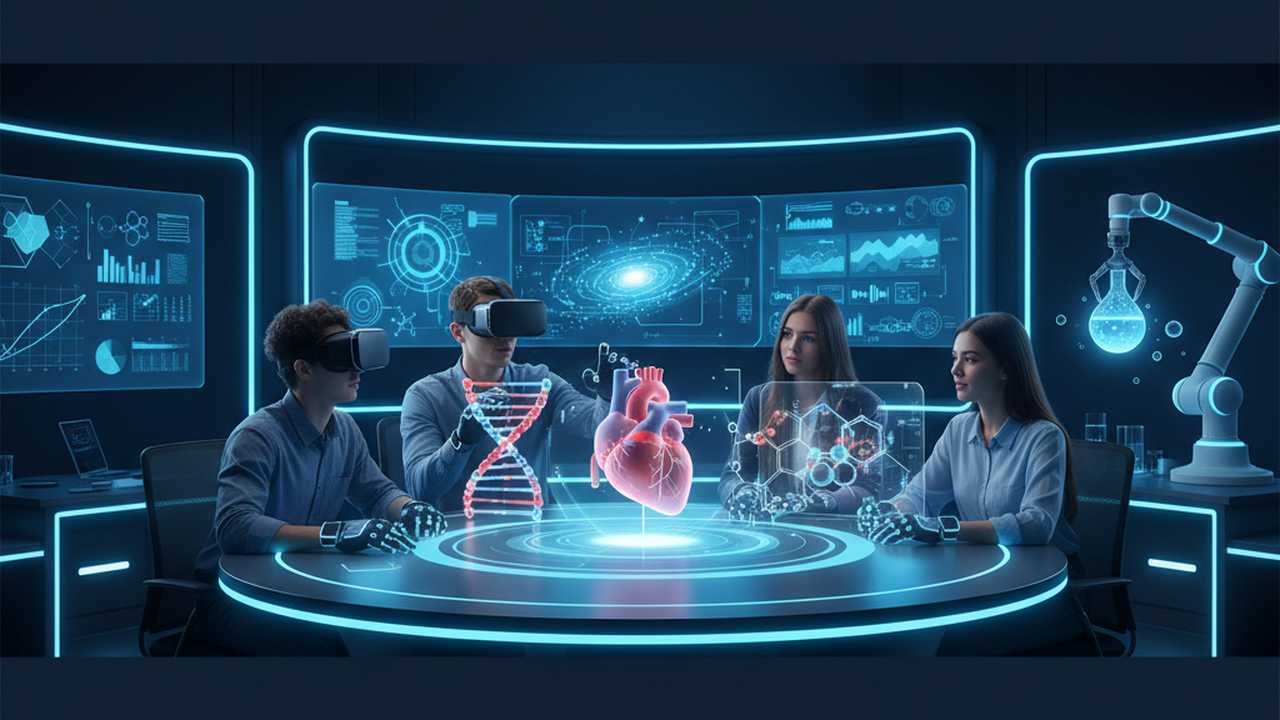
Imagine standing in a pristine, virtual laboratory, the scent of freshly prepared reagents filling the air as you don your digital gloves. The hum of virtual equipment surrounds you, and the glow of interactive simulations illuminates your path. This is not a distant dream but a rapidly advancing reality in Indiana public education. Virtual labs are transforming the landscape of science, technology, engineering, and mathematics (STEM) education, offering immersive experiences that bridge the gap between theoretical knowledge and practical application.
The Emergence of Virtual Labs in Indiana Public Education
In recent years, Indiana public education has embraced the integration of virtual labs, recognizing their potential to enhance STEM learning. Institutions like Purdue University have pioneered initiatives, securing significant grants to develop blended virtual-physical models for STEM instruction. These advancements aim to provide students with interactive, scalable, and enriching lab experiences, making high-quality STEM education accessible to all, regardless of geographical or financial constraints. The state’s commitment to innovation is evident in programs like the Indiana STEM Educator Expansion Program, which supports educators in transitioning to STEM-focused teaching roles, further embedding virtual labs into the curriculum.
Experiential Learning: The Heartbeat of Virtual Labs
At the core of virtual labs lies experiential learning – the process of learning through direct experience. This approach allows students to engage in hands-on activities, fostering deeper understanding and retention of knowledge. Virtual labs simulate real-world scenarios where students can conduct experiments, solve complex problems, and witness the outcomes of their actions in a controlled, risk-free environment. This immersive experience not only enhances comprehension but also cultivates critical thinking and problem-solving skills, essential components of STEM education.
Enhancing STEM Knowledge Retention through Immersive Experiences
Traditional lecture-based teaching methods often result in passive learning, where students struggle to retain information. In contrast, virtual labs promote active engagement, leading to improved knowledge retention. Studies have shown that students who participate in hands-on virtual labs demonstrate a higher level of understanding and long-term retention of STEM concepts. By interacting with dynamic simulations and receiving immediate feedback, learners can reinforce their knowledge and correct misconceptions promptly, solidifying their grasp on complex topics.
Accessibility and Inclusivity: Breaking Down Barriers
One of the most significant advantages of virtual labs is their ability to democratize STEM education. In Indiana public education, virtual labs are making high-quality science education accessible to students in rural and underserved areas. The Ivy Tech Mobile STEM Lab, for instance, has reached numerous schools across the state, providing students with opportunities to engage in STEM activities that would otherwise be unavailable to them. This inclusivity ensures that all students, regardless of their background or location, have the chance to explore and excel in STEM fields.
Real-World Applications: Bridging Theory and Practice
Virtual labs offer students the opportunity to apply theoretical knowledge to real-world scenarios. By simulating authentic lab environments, students can experiment with variables, observe outcomes, and analyze data, mirroring the processes used by professionals in the field. This hands-on approach not only reinforces theoretical concepts but also prepares students for future careers in STEM industries. Programs like the RETAIN initiative provide high school teachers with research experiences and knowledge of careers in nanotechnology, further bridging the gap between education and industry.
Engaging Educators: Professional Development and Support
To effectively implement virtual labs, educators must be equipped with the necessary skills and resources. Indiana public education addresses this need through professional development programs and partnerships. The INLearning Partnership, for example, collaborates with educators to provide comprehensive professional learning resources, including workshops, lesson ideas, and community support. These initiatives ensure that teachers are well-prepared to integrate virtual labs into their classrooms, maximizing the benefits for students.
Future Prospects: The Evolution of Virtual Labs
The future of virtual labs in Indiana public education is promising. With advancements in technology, virtual labs are becoming more sophisticated, offering even more immersive and interactive experiences. The integration of artificial intelligence and machine learning into virtual labs will allow for personalized learning pathways, adapting to the individual needs and progress of each student. As these technologies continue to evolve, virtual labs will play an increasingly vital role in shaping the future of STEM education in Indiana and beyond.
Conclusion: Embracing the Virtual Revolution in STEM Education
Virtual labs are not just a trend but a transformative force in STEM education. In Indiana public education, they are reshaping how students learn, making science more accessible, engaging, and effective. By embracing virtual labs, educators can provide students with the tools and experiences necessary to thrive in the ever-evolving world of STEM. The time to act is now – don’t let your students miss out on the future of education.
