


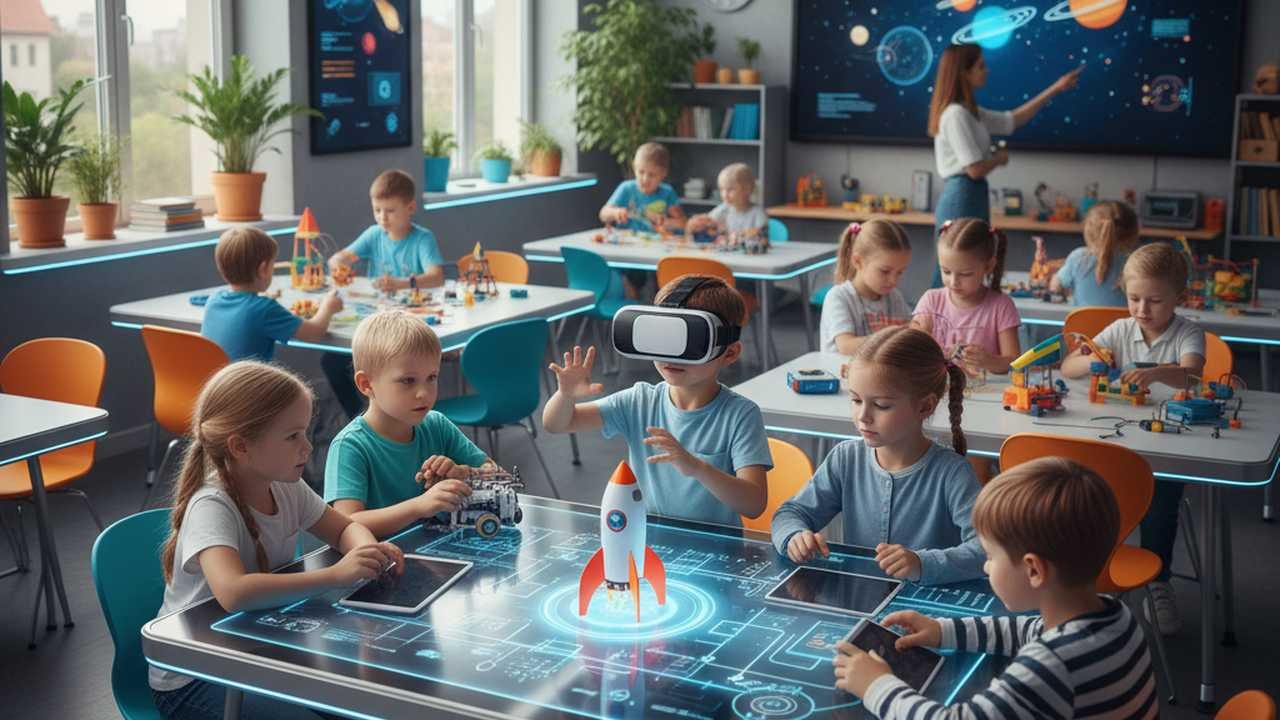
In 2025, the landscape of STEM (Science, Technology, Engineering, and Mathematics) education is undergoing a revolutionary transformation. The traditional classroom is evolving into a dynamic, interactive environment where young learners are immersed in hands-on experiences that ignite curiosity and foster critical thinking. This shift is not just a trend; it’s a necessity to prepare the next generation for the challenges and opportunities of the future. As we delve into these innovative techniques, it’s crucial to understand how they are reshaping education and why embracing them is imperative.
The Rise of Project-Based Learning (PBL)
Project-Based Learning (PBL) has emerged as a cornerstone of modern STEM education. This approach shifts the focus from passive absorption of information to active problem-solving and collaboration. In PBL, students tackle real-world challenges, working in teams to research, design, and implement solutions. For instance, a group of students might be tasked with designing a sustainable energy solution for their school, integrating principles of physics, engineering, and environmental science. This method not only enhances subject matter understanding but also develops essential skills such as teamwork, communication, and time management.
One notable example of PBL in action is the Astrobiology STEM Activation Program at Woodcrest Elementary in Midland. In this program, second-graders engaged in a four-week exploration of space science and astrobiology, building lunar plant habitats and investigating seed growth in space-like conditions. Supported by mentors from Dow High Space Farmers and NASA HUNCH Academy, students experienced firsthand the complexities of scientific inquiry and the importance of collaboration in research. Such programs exemplify how PBL can make abstract concepts tangible and inspire a passion for STEM fields among young learners.
Integrating Virtual and Augmented Reality (VR & AR)
Virtual Reality (VR) and Augmented Reality (AR) are revolutionizing STEM education by providing immersive learning experiences that were once the realm of science fiction. These technologies allow students to explore complex concepts in a highly interactive manner. Imagine a biology class where students can virtually dissect a frog or a history lesson that takes them on a tour of ancient civilizations – all from the safety and convenience of their classroom.
In Maharashtra, India, the State Council of Education Research and Training (SCERT) has launched a statewide school competition named Rangotsav, encouraging innovative experiential learning techniques. One example includes using a hopscotch game to teach fractions and geometry, enhancing student engagement with abstract concepts. This initiative highlights the potential of integrating technology into education to make learning more engaging and effective.
Emphasizing Inquiry-Based Learning
Inquiry-Based Learning (IBL) is an educational strategy that encourages students to ask questions, explore, and investigate, fostering a deeper understanding of the subject matter. This approach aligns with the scientific method, as students formulate hypotheses, conduct experiments, and analyze results. IBL promotes critical thinking and problem-solving skills, essential components of STEM education.
For example, in a chemistry class, students might be presented with a mystery substance and tasked with determining its composition through a series of experiments. This hands-on approach not only makes learning more engaging but also helps students develop a scientific mindset, preparing them for future challenges in STEM fields.
Leveraging Gamification to Enhance Engagement
Gamification involves incorporating game elements into the learning process to increase student engagement and motivation. By turning learning activities into games, educators can make complex STEM concepts more accessible and enjoyable. This approach taps into students’ natural love for play, transforming learning into an interactive and rewarding experience.
In Hyderabad, India, the state government has introduced coding, robotics, and artificial intelligence (AI) into the government school curriculum, starting from the primary level. Special educational materials have been developed, and teachers have undergone training to adapt to these subjects. Initially, primary students will learn the basics of coding and robotics, while AI will be incorporated to simplify complex concepts through interactive, activity-based learning. This initiative highlights the potential of gamification in making STEM education more engaging and accessible to young learners.
Fostering Collaboration Through Team-Based Projects
Collaboration is a fundamental aspect of STEM professions, and fostering this skill in young learners is crucial. Team-based projects encourage students to work together, share ideas, and solve problems collectively. This approach mirrors real-world scenarios where teamwork is essential for innovation and success.
In rural Australia, the Creative Bytes program has been initiated to enhance STEM and coding education in communities with limited resources. Designed to bridge the educational gap between urban and rural areas, the initiative supports local educators by providing curricula and guidance. Evidence shows rural students lag behind their urban counterparts in STEM subjects. The program’s notable success includes empowering students and educators, such as a part-time librarian in Victoria and an elderly librarian in Western Australia, to embrace and disseminate STEM knowledge. They especially enjoy teaching students to code through game-building classes, boosting their confidence and aspirations. This program exemplifies how collaboration and community involvement can enhance STEM education in underserved areas.
Incorporating Real-World Applications into the Curriculum
Integrating real-world applications into the STEM curriculum helps students understand the relevance of what they are learning and how it applies to everyday life. This approach bridges the gap between theoretical knowledge and practical skills, preparing students for future careers in STEM fields.
For instance, students might work on projects that address local environmental issues, such as designing a water filtration system for their community. By applying STEM concepts to solve real problems, students gain a deeper appreciation for the subject matter and develop skills that are directly applicable to the workforce.
Utilizing Artificial Intelligence to Personalize Learning
Artificial Intelligence (AI) is increasingly being used to personalize learning experiences, catering to the individual needs and learning styles of students. AI-powered tools can analyze student performance and provide tailored recommendations, helping educators identify areas where students may need additional support.
In Telangana, India, the state government has introduced AI into the school curriculum to simplify complex concepts through interactive, activity-based learning. This initiative aims to spark curiosity and make students competitive internationally by leveraging AI to enhance the learning experience. By personalizing education, AI ensures that each student can learn at their own pace and according to their unique needs.
Ensuring Equity and Inclusion in STEM Education
Ensuring equity and inclusion in STEM education is essential to provide all students, regardless of their background, with equal opportunities to succeed. This involves addressing barriers that may prevent certain groups from accessing quality STEM education and creating an inclusive environment that supports diverse learners.
Programs like Creative Bytes in rural Australia demonstrate the importance of inclusivity in STEM education. By providing resources and support to underserved communities, these initiatives help bridge the educational gap and ensure that all students have the opportunity to engage with STEM subjects. Ensuring equity and inclusion is not just a moral imperative but also a strategic necessity to harness the full potential of all learners.
Preparing Students for Future Careers in STEM
Preparing students for future careers in STEM requires a comprehensive approach that combines knowledge acquisition with the development of essential skills such as critical thinking, problem-solving, and collaboration. By providing students with opportunities to engage in real-world projects, educators can help them build a strong foundation for success in STEM fields.
Initiatives like the Astrobiology STEM Activation Program at Woodcrest Elementary exemplify how hands-on experiences can inspire students and prepare them for future careers in science and technology. By engaging students in meaningful projects and exposing them to professionals in the field, these programs help bridge the gap between education and industry, ensuring that students are well-equipped for the challenges of the future.
To learn more about how collaborative approaches enhance critical thinking skills, explore initiatives like the gilbert education foundation that emphasize interdisciplinary STEM education.
If you are looking to enhance STEM learning opportunities, consider strategies that promote engagement and accessibility, especially for those pursuing a higher education PhD. These approaches not only foster inclusivity but also empower all students to thrive in their academic journeys.
If you are interested in the innovative ways Indiana public education is embracing technology, explore how virtual labs enhance experiential learning and improve STEM knowledge retention.
If you want to explore how makerspaces in education can ignite a passion for learning, consider the endless possibilities they offer for hands-on experiences and collaborative projects.
